

Analysis of Environmental Factors Affecting the Accuracy of Turbidity Meters
Release Time
2025-12-25 09:53
In water quality testing using turbidity meters, environmental factors often have a more significant impact on measurement results than anticipated. Turbidity measurement is based on the principle of light scattering; therefore, any external factor that affects the light path, sample condition, or instrument operating conditions can lead to reading deviations. Understanding and controlling these environmental factors is crucial for ensuring accurate and reliable turbidity detection.
Light environment is the most direct influencing factor. Turbidity meters require a stable, relatively enclosed optical environment to operate. If the light in the test area is too strong or there is reflected light interference, external light may enter the detection system, interfering with the light scattering signal and causing readings that are too high or fluctuate. Therefore, direct sunlight or strong light should be avoided during measurement, and a well-shaded operating space should be selected to help maintain the stability of optical measurements.
Temperature changes can potentially affect turbidity measurements. At different temperatures, the refractive index of water and the physical structure of suspended particles may change, thus causing deviations in the measured values. For example, some particles may dissolve or change morphology when the temperature rises; conversely, they may aggregate when the temperature is too low. Therefore, before measurement, ensure that the sample and instrument are at or near room temperature to minimize reading deviations caused by temperature differences.
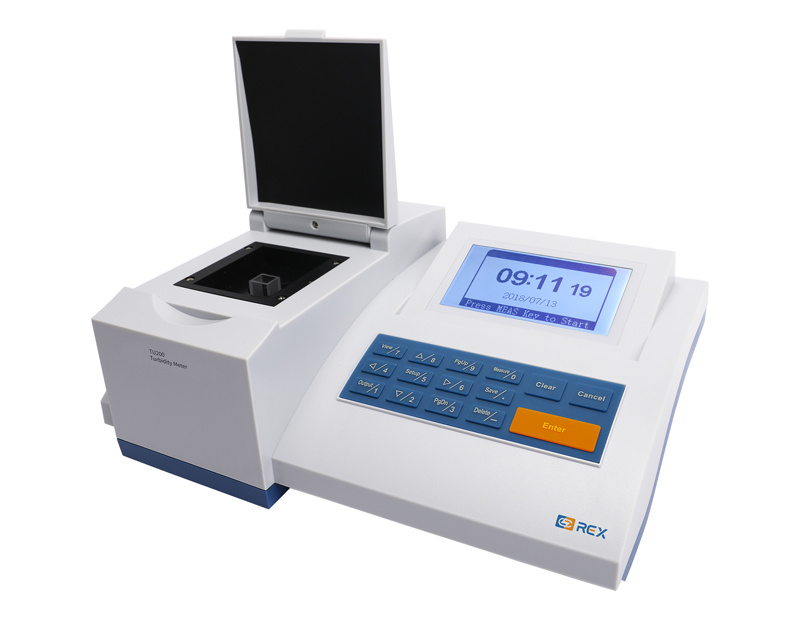
Vibration and airflow are also easily overlooked factors. The Turbidity Meter requires a stable operating environment during measurement. If the measuring platform vibrates, suspended particles in the vial will constantly move, making readings unstable. Furthermore, airflow causing air bubbles and dust to enter the sample vial can also interfere with the measurement optical path. Therefore, it is recommended to perform measurements on a stable operating platform and ensure the surrounding environment is clean and free from strong airflow interference.
Humidity and dust also indirectly affect measurements. High humidity may cause water droplets to form on the outer wall of the sample vial, altering the light transmission effect; dust adhering to the vial wall can also cause abnormal changes in scattered light. Therefore, before each measurement, carefully check the cleanliness of the colorimetric vials and clean the vials with a lint-free cloth to ensure unobstructed beam transmission.
The accuracy of the Turbidity Meter depends not only on instrument performance but also on environmental conditions. Controlling factors such as light, temperature, vibration, humidity, and cleanliness can effectively reduce external interference, thereby improving the stability and reliability of measurement results and providing more accurate data support for water quality monitoring and experimental analysis.

PRECISION PERFECT
Contact Us
-
Tel:0086-021-39506429/39506392
Mail:info@lei-ci.com
-
Fax: 0086-021-39506398
 Contact
 E-mail
